
How to Save Money on Your Modular Kitchen Without Compromising Quality
A beautiful modular kitchen doesn't have to drain your savings. Learn how to make smart choices on layouts, materials, and finishes — and still get the kitchen you've always dreamed of.
How to Save Money on Your Modular Kitchen Without Compromising Quality
Everyone warns you not to compromise on quality. But nobody sits you down and shows you where the money actually goes - and where you can safely pull back. That's what this post is about.
Last year, my brother got married. Two months later, he called me about setting up a modular kitchen in his new flat in Jaipur. His budget? ₹2 lakh. Firm. His wife wanted something that didn't look cheap. He wanted something that wouldn't rot in two monsoons.
We made it work. The kitchen looks good. It functions well. Eight months in, nothing has warped, peeled, or come loose. And no, we didn't get lucky. We just made a few decisions early that saved a lot of money later.
Here's what we did. And what I'd tell anyone who's trying to build an affordable modular kitchen without ending up with regret.

Write down a number before you visit a single showroom
This sounds basic. It isn't. Because the moment you walk into a modular kitchen showroom, everything looks necessary. The soft-close drawers. The tall pantry unit. The glossy acrylic shutters. You start saying "yes" to things you didn't even know existed five minutes ago.
We sat at a chai stall. Wrote down ₹2 lakh on a napkin. Split it roughly - cabinets, countertop, chimney, hob, sink, hardware, labour. That napkin saved us from overspending at least three times during the process.
The layout changes the bill more than the material
People obsess over materials. Fair enough. But the layout quietly decides how much material you even need. A straight-line or L-shaped kitchen uses fewer cabinets, fewer shutters, and less hardware than a U-shape or parallel setup. Less material means less money. Simple math.
My brother's kitchen was about 80 square feet. We went L-shaped. It fit perfectly. Enough counter space. Enough storage. And the one open side made the kitchen feel less like a box.
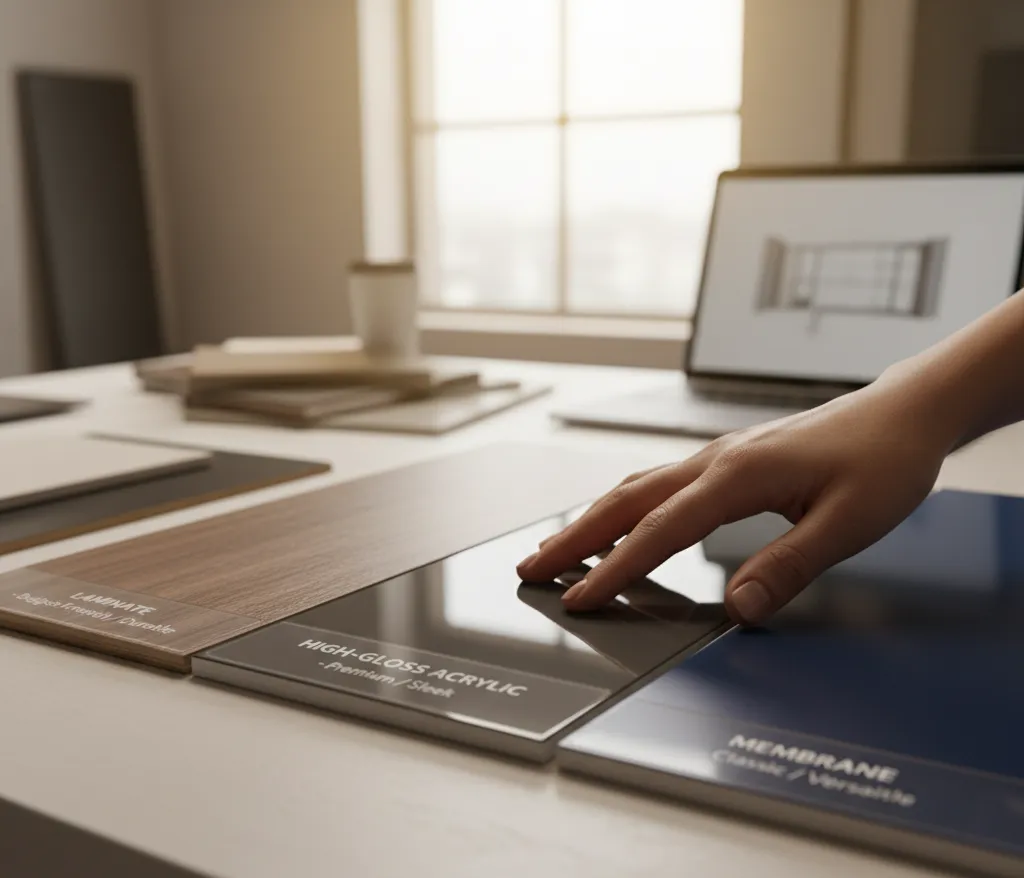
Use BWR plywood where it matters - and cheaper board where it doesn't
This one trick alone saved us close to ₹8,000. Here's the thing - your base cabinets deal with water, splashes, and moisture from the floor. They need BWR (boiling water resistant) plywood. That's non-negotiable. But your overhead wall cabinets? They barely see any water. For those, HDHMR board works just fine. It's dense, termite-resistant, and a lot cheaper than BWR.
Most showrooms won't suggest this split. They'll push full BWR everywhere because it costs more. Ask for it specifically.
What we paid: BWR plywood for base at ₹85/sq ft. HDHMR for wall units at ₹55/sq ft. The kitchen hasn't had a single moisture issue so far. My sister-in-law cooks dal and sabzi every day in it. Heavy Indian cooking. No problems.
Laminate shutters look fine - stop chasing acrylic
My sister-in-law wanted matte acrylic shutters. I showed her the price difference. Acrylic was ₹2,500 per shutter. Textured laminate was ₹700. She spent 45 minutes flipping through the sample book. Found a light grey-green she liked. That was that.
Eight months later, the laminate still looks sharp. No scratches. No peeling. Could she tell the difference from acrylic side by side? Probably. Does anyone who walks into her kitchen notice? Not once.
Buy two or three accessories, not twelve
Pull-out baskets. Carousel corners. Cutlery inserts. Plate holders. Spice racks. The accessories catalogue is designed to make you feel like you need all of it. You don't.
We bought a cutlery tray for the drawer next to the hob and a pull-out dustbin under the sink. That's it. Everything else we skipped. My sister-in-law uses a steel rack on the counter for plates. Works fine. Looks fine. Cost ₹400 from the local market.
You can always add accessories later. You can't undo a blown budget.
Spend more on the chimney and hob - not less
This is the one place where I'll tell you to open your wallet a little wider. A cheap chimney with low suction power is useless with Indian cooking. Oil, masala smoke, turmeric stains on the ceiling - all of that happens when the chimney can't keep up. We spent ₹7,500 on a decent auto-clean chimney. The hob was a 3-burner glass-top from a known brand. ₹5,200.
These two items take the most daily beating in any kitchen. Go cheap here and you'll replace them in two years. That's not saving money. That's delaying spending.
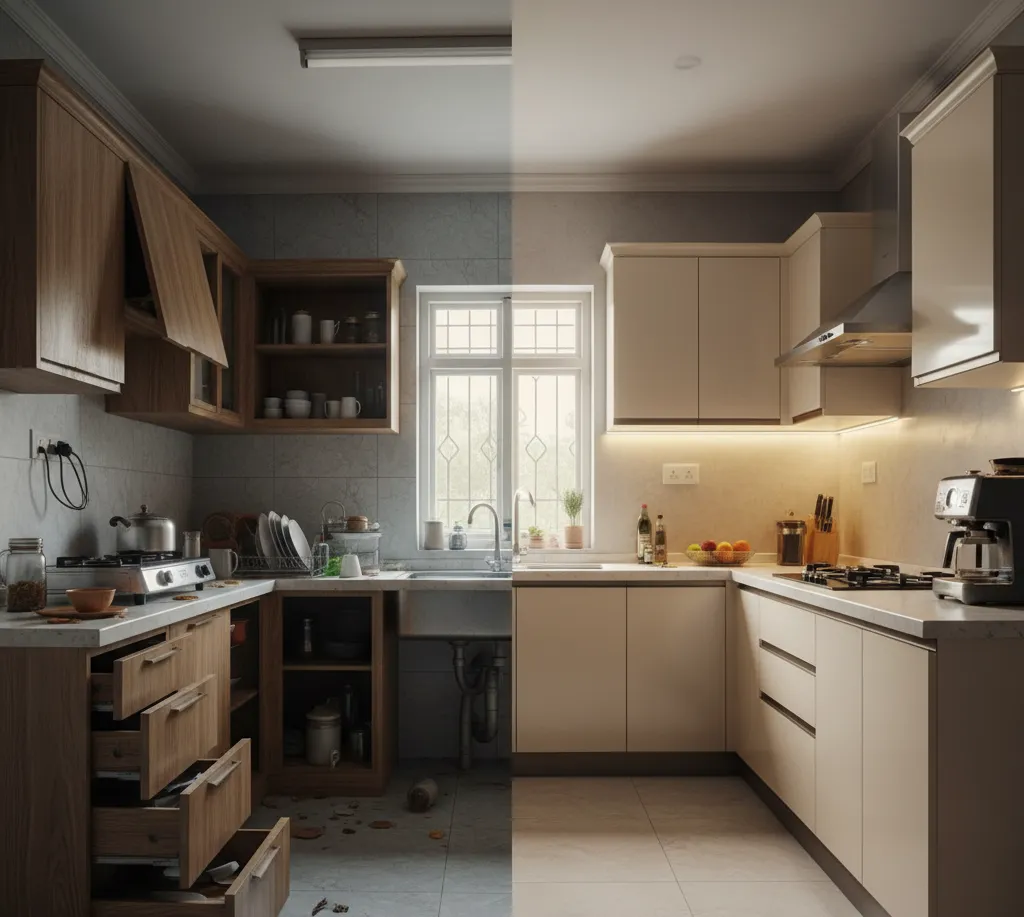
Get three quotes - and read the fine print
We visited three showrooms on Ajmer Road. The quotes varied by almost ₹40,000 for nearly the same kitchen. One quote didn't include installation. Another quietly added a "design consultation" charge. The third was straightforward - everything itemised, no surprises.
We went with the third guy. Not because he was cheapest. Because we could see exactly where the money was going.
So what's the real takeaway here?
A budget modular kitchen doesn't mean a bad kitchen. It means you're being honest about what you need right now versus what you can add later. It means choosing materials smartly instead of emotionally. It means walking into a showroom with a number in your head and not walking out until you've stuck to it.
My brother's kitchen cost ₹1.92 lakh. Under budget. His wife cooks in it every day. The laminate hasn't warped. The chimney pulls strong. The drawers close smooth. Nobody who visits asks if it was "budget."
That's the whole point.
Planning your own kitchen? We've got more guides like this.
