
How to Termite-Proof Your Modular Kitchen in Jaipur: Best Materials to Use
My uncle's ₹2.5 lakh kitchen was eaten from the inside by termites. The rebuild cost ₹38,000. My mummy's kitchen — same house — survived 16 years untouched. Here's what made the difference.
How to Termite-Proof Your Modular Kitchen in Jaipur: Best Materials to Use
I need to tell you about the sound my uncle made when he opened his kitchen cabinet and the shelf collapsed. It wasn't a scream exactly. More like the noise a man makes when he realizes the ₹2.5 lakh modular kitchen he installed three years ago is being eaten alive from the inside.
The carpenter came. Pulled off the cabinet backing. And there they were - thousands of tiny pale insects in mud tunnels running through the plywood like miniature highways. Termites had been in there for months, maybe longer. Working silently. Chewing through wood while my uncle's family cooked dinner six inches away, completely unaware.
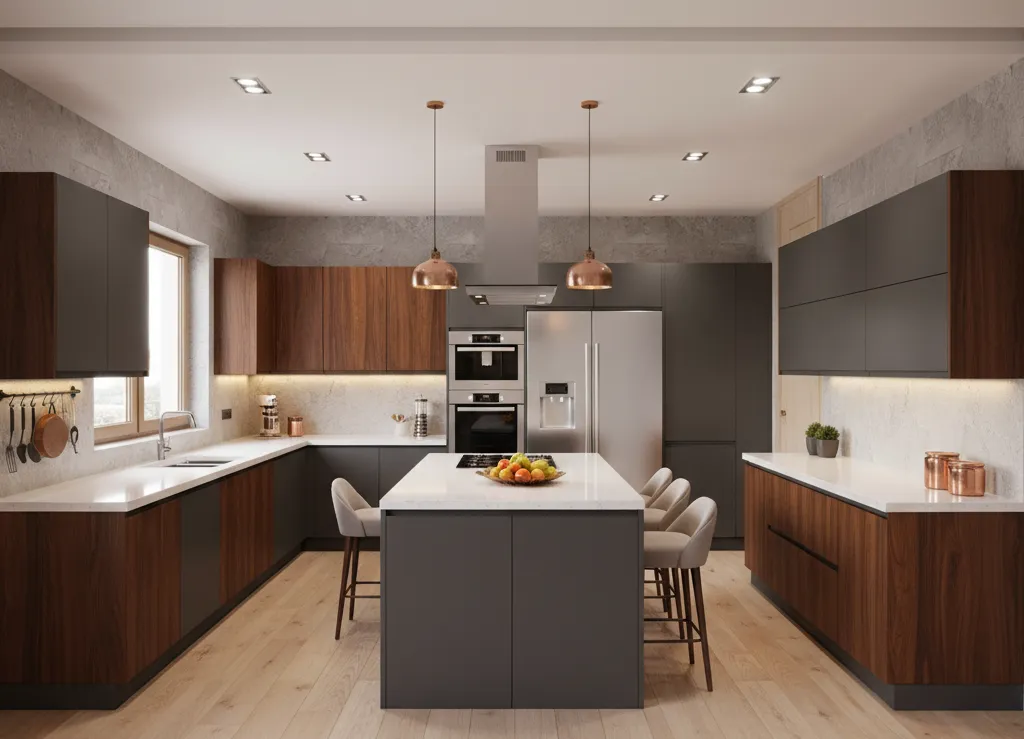
The base cabinets were destroyed. Not damaged. Destroyed. You could push your finger through the plywood. Two upper cabinets had to go too. The countertop was fine because granite doesn't care about insects. But everything made of wood? Finished. ₹38,000 to rebuild. And his wife's face when she saw the kitchen gutted to bare walls for two weeks - I don't think she's fully recovered honestly.
Mansarovar. Two years ago. And the stupid thing is - for maybe ₹5,000 more during the original installation, none of this would have happened.
Why Jaipur Kitchens Get Hit Like This
You'd think termites need jungles and rotting logs. Nah. They need cellulose, warmth, and a bit of moisture. Jaipur gives them warmth ten months a year. Monsoon gives them their moisture window. And your kitchen cabinets? All-you-can-eat cellulose buffet, open 24/7.
There's a specific termite season here - late monsoon through early winter. August to November roughly. You've seen the flying ones. Small brownish things with wings that swarm around your balcony light after the first big rain. Those are reproductive termites apartment-hunting. And sometimes they find a lovely studio behind your kitchen cabinet backing.
My mummy has been fighting termites since we moved to Malviya Nagar in 2008. She's had them in the window frames. The bookshelf. The shoe rack near the front door. Her kitchen? Untouched. Sixteen years. Not once. I'll get to why in a second - but first let me explain what went wrong at my uncle's place because the mistake is SO common and SO avoidable.
My Uncle's Kitchen Was Built With the Cheap Stuff
Commercial MR-grade plywood. Moisture Resistant. Sounds fancy until you learn that "moisture resistant" in plywood language means "can handle a slightly humid room but please don't splash water on me or let insects near me." MR plywood has zero termite treatment. It's just wood layers glued with urea formaldehyde resin and good intentions.
The kitchen company used it because it's ₹45-55 per square foot. BWR plywood - the next grade up - runs ₹70-90. Marine-grade BWP is ₹100-150+. When you're building cabinets for an entire kitchen, that per-square-foot difference adds up. My uncle looked at the quote, saw the MR option was cheapest, and said - I'm quoting him directly - "Plywood is plywood, what's the difference?"
₹38,000. That's the difference.
Mummy's Kitchen - Same House, Different Story
Same house that had termites in the bookshelf, the window frames, and the shoe rack. The kitchen? Untouched since 2009.
Because my dad - and this is literally the one correct decision he made during the entire renovation, I remind him of this regularly - insisted on BWR-grade plywood for everything in the kitchen. Boiling Water Resistant. Made with phenol formaldehyde resin instead of the weaker urea stuff. And here's the key - most branded BWR plywood comes pre-treated with anti-termite and anti-borer chemicals.
Cost 40% more than MR at the time. My dad complained about the price for roughly six months until termites appeared in his bookshelf in the living room. My mummy's response - which she has repeated at least annually since then - was: "Your bookshelf is getting eaten. My kitchen is fine. Tell me again how BWR was too expensive."
She's been riding that line for sixteen years. No signs of letting up.
Now I want to be honest - BWR isn't invincible. The chemical treatment discourages termites but it's not a force field. In really severe infestations, over many years, even BWR can eventually get compromised. But the difference between MR and BWR is the difference between leaving your front door wide open and locking it. Both COULD be broken into technically. But one takes dramatically more effort.
My mummy also does something else every year that I think matters as much as the plywood choice. Maybe more. I'll tell you about it in a minute because it costs ₹300 and takes 20 minutes and it drives me insane that nobody in my uncle's family knew about it.
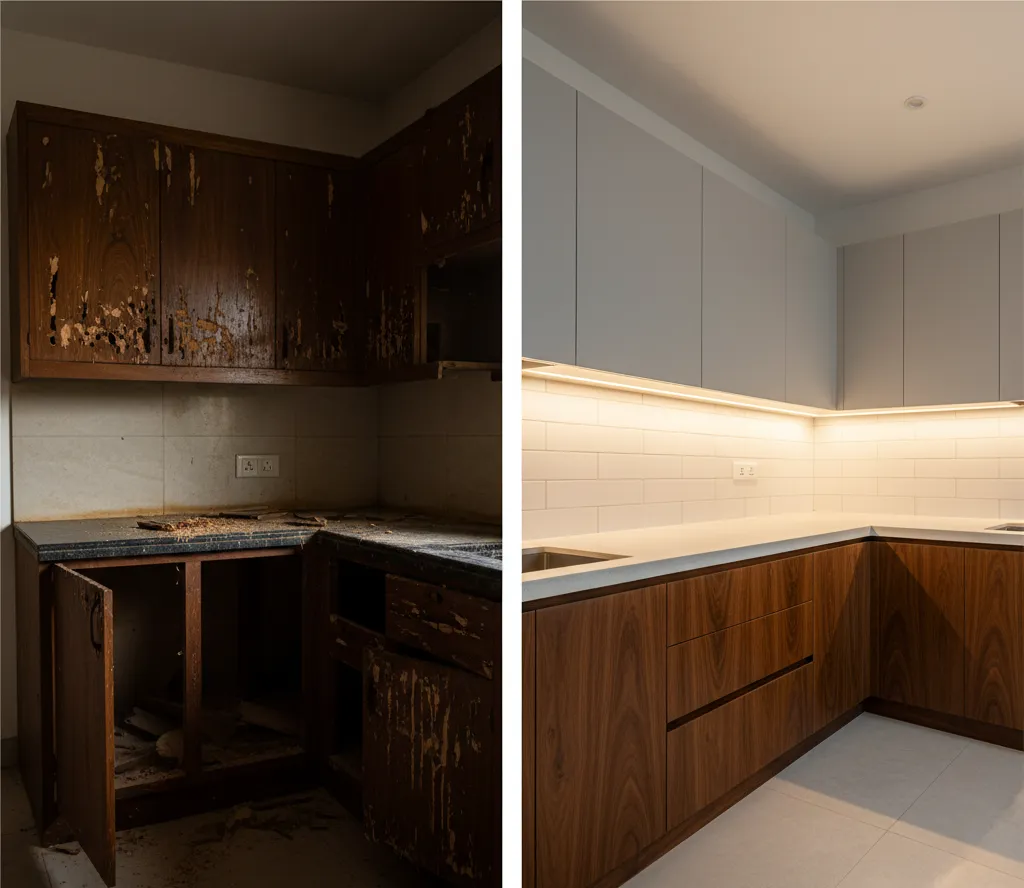
What Uncle Used the Second Time Around
After the termite nightmare, when the carpenter was rebuilding the kitchen, I told my uncle - BWP. Marine grade. IS-710. The stuff they theoretically build boats with. Can survive 72 hours of continuous boiling without falling apart. If THAT can't handle kitchen steam and Jaipur termites, nothing can.
He didn't argue about price this time. Not for one second. "Just do it," he said. Funny how ₹38,000 in termite damage recalibrates your feelings about plywood budgets.
BWP cost him roughly ₹8,000-10,000 more than BWR would have for the same kitchen. For the base cabinets and under-sink area especially - the parts closest to the wall where termites typically enter and where water exposure is highest.
Two years since the rebuild. His wife knocks on the cabinet doors with her knuckles every few weeks. Literally knocks. Checking for hollow sounds. She's traumatised and I don't blame her. So far? Solid. Every knock sounds exactly like it should - dense wood, nothing eaten, nothing compromised.
The Weird Board Bhabhi's Designer Suggested
When bhabhi was doing her Jagatpura kitchen last year, her designer threw out a name I hadn't heard before. HDHMR. I made him repeat it twice because I thought he was making up acronyms.
High Density High Moisture Resistance. It's not plywood - like, it's not layers of wood glued together. It's wood fibres smashed together under insane pressure into a super dense board. Think of it like... plywood's more intense cousin who went to engineering school.
The termite thing about HDHMR is interesting. Because the board is SO dense and the fibres are SO compressed with resin, termites apparently have a much harder time chewing through it compared to layered plywood where they can work between the layers. Bhabhi's designer called it "functionally termite resistant" which I think means "termites could technically eat it but they'd have a really bad time trying."
Cost sits between BWR and BWP - about ₹80-120 per square foot. Bhabhi's complete kitchen was ₹2.8 lakh. Only the under-sink section got upgraded to marine plywood because, as I've learned from mummy's kitchen, that's the area that takes the most water punishment.
It's been one year with the HDHMR. No termite issues. But honestly one year isn't enough data. I told bhabhi I'm checking back in 2028. She thinks I'm joking. I'm not. I have a phone reminder set and everything.
The ₹300 Thing That Might Matter More Than Any Plywood Grade
Remember I said mummy does something every year? Here it is.
Anti-termite spray. She buys a bottle from the pest control supplies shop in Vaishali Nagar. ₹300-400. Every June, before monsoon hits, she pulls off the kick plates at the base of the kitchen cabinets. Sprays the wall behind them. Sprays the floor underneath. Sprays the cabinet backs where she can reach them. Lets it dry for a couple hours. Puts the kick plates back.
Twenty minutes. Once a year. She's done this every June since 2010. Puts it on her calendar right next to "get AC serviced" and "order mango pickle supplies."
The shoe rack that got termites? She never sprayed it. The window frames? Never sprayed. The bookshelf - dad's precious bookshelf? Never sprayed. Every wooden thing in the house that WASN'T on her annual spray schedule eventually got termites. Everything that WAS on the schedule - specifically the kitchen - stayed clean for sixteen years.
Correlation isn't causation and all that. But when the pattern is this consistent across sixteen years in a house that DEFINITELY has termites nearby? I'm calling it.
My uncle had no idea this spray existed. His kitchen company never mentioned it. His contractor didn't bring it up. The interior designer - whoever that was - said nothing. ₹300. Twenty minutes. Once a year. That's all it would have taken.
I bought three bottles after his disaster. One for him, one for my brother, one for myself. My brother looked at me like I was being dramatic. I told him about uncle's ₹38,000 repair bill. He sprayed his kitchen that weekend.
Edge Banding - the Boring Thing That Actually Matters
One more thing and then I'll shut up.
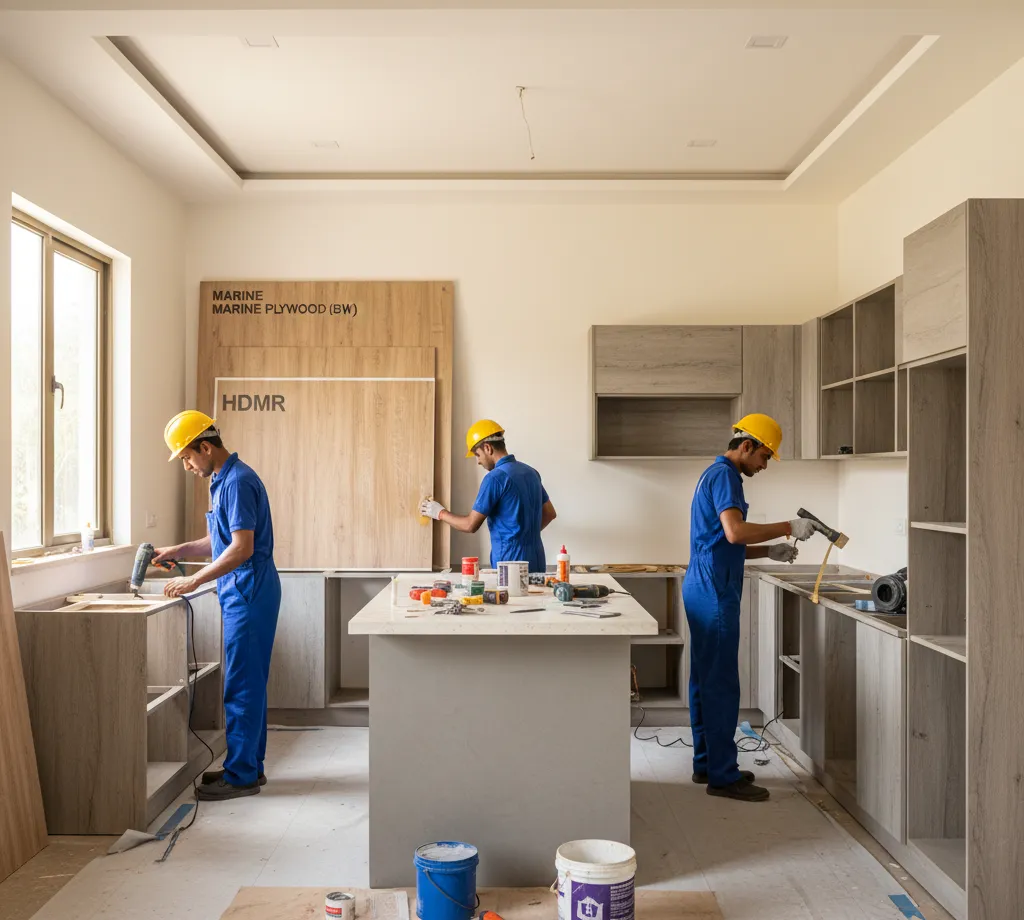
When plywood is cut for cabinets, the edges are raw. You can see the layers. Those raw edges are entry points - moisture gets in from the sides, softens the wood, and makes it more attractive to termites. It's like leaving a window open in your locked house.
Proper edge banding - a thin strip of laminate or PVC glued to every exposed plywood edge - seals those entry points. It costs almost nothing extra during installation. Maybe ₹500-800 for the entire kitchen.
My uncle's original kitchen? Edges were banded on the visible parts. The parts hidden behind kick plates and backing panels? Raw. Exposed. That's where the termites got in.
When I asked the carpenter why he hadn't banded those edges, he shrugged. "Nobody asked for it." I wanted to scream. The edges that are HIDDEN are the ones that need banding the most because those are the ones touching the wall where termites live. But because they're invisible, nobody thinks about them. Not the homeowner. Not the carpenter. Not the designer.
Ask your carpenter to band ALL edges. Visible and hidden. Tell them specifically. Don't assume they'll do the hidden ones. They won't unless you say it out loud.
Mummy still brings up uncle's termite disaster at family dinners. Uncle still changes the subject. His wife still knocks on her new cabinets. And I still check my phone reminder - bhabhi's HDHMR kitchen, review date: June 2028.
We're a fun family.
Kitchen survival tips for Jaipur's specific problems? KitchenKaki - we share what the showroom guy won't.
