
Island Kitchen Design: Is It Right for Indian Homes?
Everyone wants an island kitchen these days. But does it actually survive daily Indian cooking? Here's what real homeowners discovered — the good, bad, and greasy.
Island Kitchen Design: Is It Right for Indian Homes?
So my maasi got this beautiful island kitchen installed in her Jaipur flat. Marble top, fancy lights, the works. She was SO proud of it. Posted it on the family WhatsApp group and everything.
Fast forward six months. The marble has turmeric stains that won't come out. Oil splatter everywhere because she put the gas hob on the island. And her husband keeps complaining there's no space to walk to the fridge without doing a weird sideways shuffle.
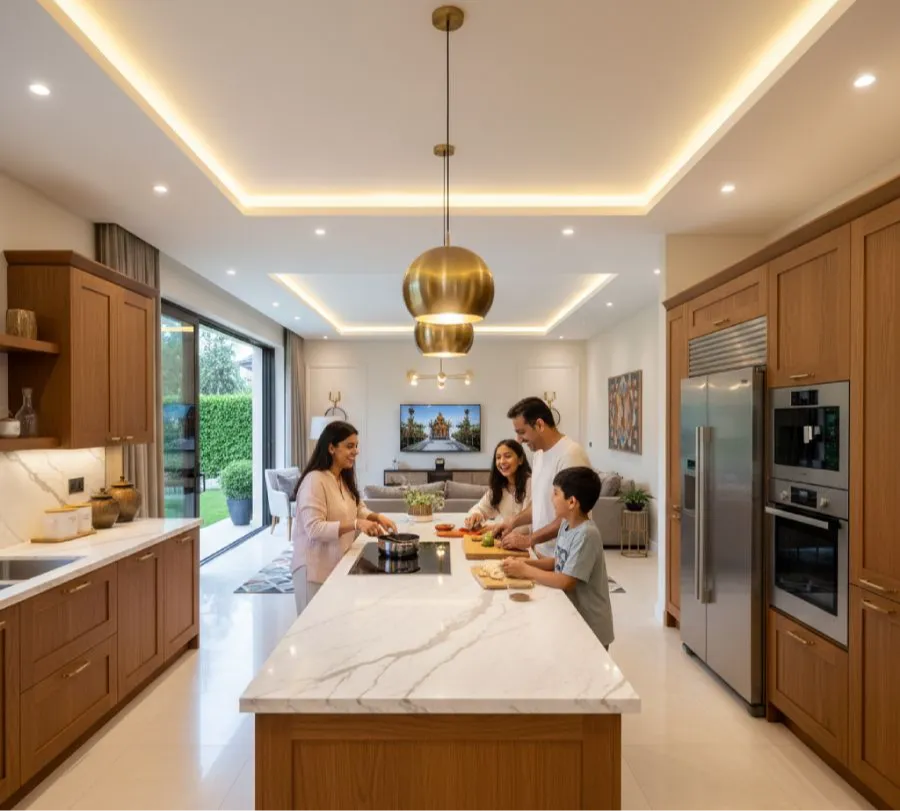
I love my maasi. But that island was a mistake. Not because islands are bad - they're amazing in the right kitchen. Hers just wasn't the right kitchen.
And I think a LOT of Indian families make this same mistake right now because Instagram makes it look so easy. So let me break this down properly.
Okay but What Even IS an Island Kitchen?
You probably already know this but just in case - it's a counter that sits in the middle of your kitchen. Doesn't touch any wall. You can walk around it completely.
That's it. That's the whole concept.
Some people keep it dead simple - just a chopping surface with cabinets underneath. Others go crazy and add a sink, cooktop, wine rack (?), and bar seating. Both are valid. Depends on your kitchen size and honestly, your budget.
The rest of your kitchen - your L-shape or U-shape or whatever - stays along the walls. The island just sits there in the centre doing its thing.
The Space Problem That Nobody Wants to Hear About
This is the boring part but it's also the MOST important part so please don't skip it.
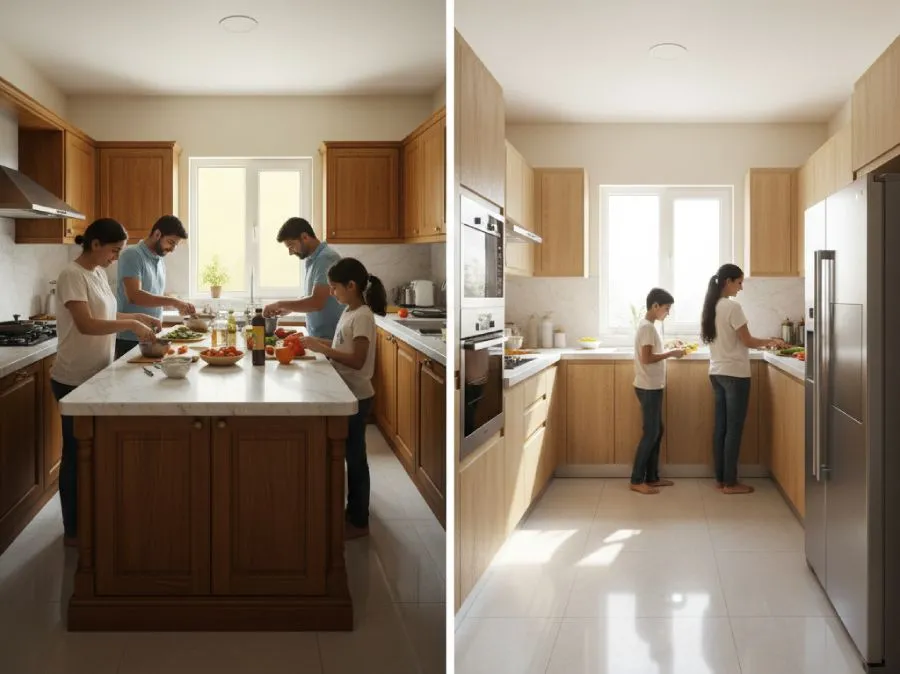
Your kitchen needs to be at least 12 by 12 feet. At LEAST. I'm not making this up - ask any interior designer. The island itself will be around 4 to 6 feet long. And you need 3 feet of gap on every side where someone can walk. Otherwise forget about it. You'll bang your hip on the corner every morning and curse the day you built it.
Most kitchens in Indian apartments? 8 by 10 feet. Some are even smaller. My friend's kitchen in a Whitefield 2BHK is barely 7 by 9. An island in there would be comedy.
Here's what I tell everyone. Before you spend a single rupee, take newspaper sheets and lay them on your kitchen floor in the shape of the island you want. Leave them there for three days. Cook like you normally do. If you're constantly stepping on the newspaper or kicking it while opening the fridge - there's your answer. Don't build it.
When It Works Though? Man, It's Good.
I don't want to sound all negative because honestly, I've been to some Indian homes where the island kitchen just made sense. Like this family in Bhopal - huge kitchen, maybe 14 by 13. Open plan. The island had a thick wooden top, four drawers on one side, two stools on the other. The aunty there said she can't imagine cooking without it anymore.
And I believe her. Indian cooking is CHAOS. Good chaos, but still chaos. You've got the chakla out for rotis, somebody's grinding masala, there's a cutting board with onions, the cooker is going, and you still need somewhere to put the katori for serving. Where does it all go on a regular 2-foot-deep counter? It doesn't. You end up stacking things on top of each other.
An island fixes that. Gives you a whole separate surface just for prep work. Or plating. Or just dumping grocery bags when you walk in the door - don't pretend you don't do that.
The seating thing is nice too. Couple of stools, and suddenly everyone hangs out in the kitchen. Kids studying, husband scrolling phone, you cooking. Sounds chaotic but honestly it's the best part of Indian family life and an island encourages that naturally.
Storage underneath? Chef's kiss. Deep drawers for your pressure cookers and kadais. Pull-out trays for masala dabbas. One family even hid their mixie inside the island cabinet. Their main counter looked so clean I thought they didn't cook. They cook twice a day. The island just swallowed all the clutter.
The Part Where I Scare You a Little
Okay so here's the stuff that the kitchen companies won't put in their brochure.
The oil and smoke situation. Indian cooking is not grilled chicken and salad, yeah? We do tadka. We fry pakoras. We roast jeera in ghee. All of that produces smoke and grease that travels. If your cooktop is on the island with no wall behind it, that grease goes everywhere. Your living room. Your curtains. EVERYWHERE. My maasi learned this the hard way. Keep the heavy cooking against a wall. Always.
Chimney drama. When the cooktop is on the island, the chimney has to hang from the ceiling. Which means ductwork running across the top of your kitchen. In apartments with 9-foot ceilings? Looks cramped. Costs a fortune. And half the time the suction isn't even strong enough because the duct run is too long.
Cleaning. So much cleaning. A normal counter against a wall gets dirty on one side. An island? Grease on all four sides. Crumbs falling behind it. Dust settling on the overhang. You're wiping it after every meal. Sometimes between meals. It's a commitment.
The money thing. Nobody gives you a straight number but from what I've seen, an island kitchen costs roughly 30 to 50 percent more than the same kitchen without one. Extra slab material, plumbing if you're adding a sink, electrical points on the floor, maybe a ceiling chimney - it adds up scary fast.
No Space? Don't Force It. Do This Instead.
Real talk - some of the nicest functional kitchens I've visited have zero island. Zero. They use smarter setups that give you the same benefit.
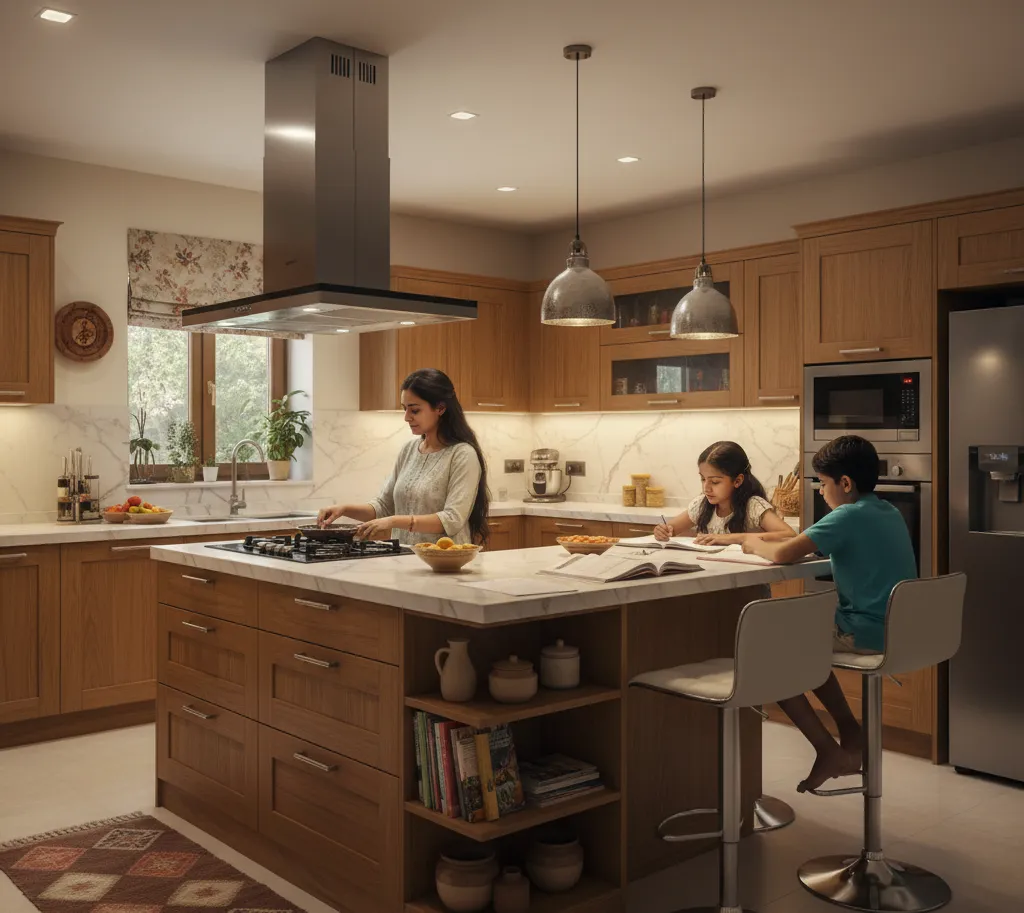
Peninsula. It's an island that's attached to one wall. So you save space on one entire side. Still gives you extra counter, storage below, and you can stick stools on the open end. Works in kitchens as small as 10 by 10. This is what I recommend to most people honestly.
Wheeled cart. Sounds basic but hear me out. Get a solid butcher-block cart with lockable wheels. Roll it to the centre when you're making Sunday biryani. Push it against the wall on weekdays. Costs maybe 5 to 8 thousand rupees. No plumber needed. No contractor headaches.
Just extend your counter. If you've got an L-shaped kitchen, stretch one arm out by 2 or 3 feet. Put two stools there. That's your breakfast bar. That's your prep station. You get the island feeling without the island problems.
Bottom Line from Someone Who's Seen Both Sides
Get an island if your kitchen is genuinely big - 12 by 12 minimum. If your layout is open plan. If you promise to keep the gas burner on the wall side with a proper chimney. Use the island for chopping, rolling, plating, sitting, chatting. Not for frying samosas.
Don't get an island because your neighbour got one. Or because it looked nice in a reel. Or because the interior designer pushed it. If your kitchen is under 150 square feet, skip it. A peninsula or a wheeled cart does the job without the regret.
Your kitchen should work for YOUR life. Not for someone else's Instagram grid.
More kitchen stuff that actually makes sense for Indian homes? That's what we do at KitchenKaki. Come hang out.
