
L-Shaped Modular Kitchen Design: Complete Guide With Photos
An L-shaped modular kitchen is a practical and space-friendly layout that works well in both small and medium homes. This guide explains how it functions, why it’s popular, and what to consider before designing one.
An L-shaped modular kitchen is one of those layouts that doesn’t try too hard—and that’s exactly why it works so well.
If you’ve used different kitchen setups before, you’ll notice this one feels a bit more natural. You’re not walking too much, not reaching too far, and not constantly adjusting your movement. Things just fall into place.
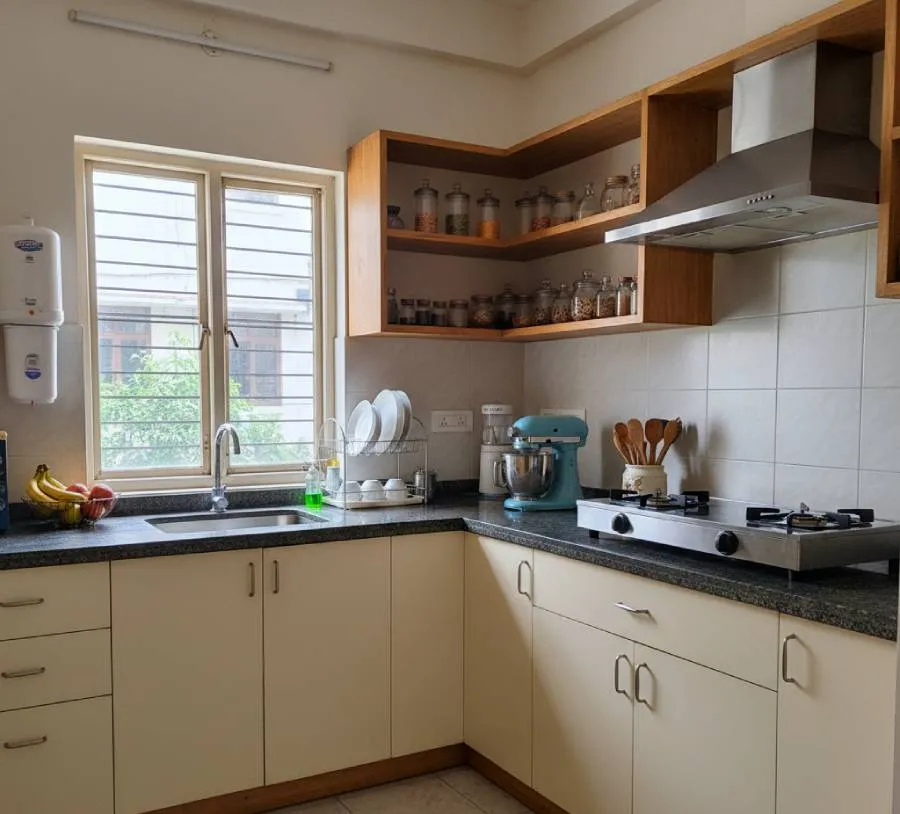
What the layout actually looks like
It’s simple. Two walls connected at a corner, forming an “L”.
That’s all there is to it on paper. But in real use, it creates a working zone where cooking, washing, and prepping stay within a comfortable distance.
You don’t have everything in a straight line, and you’re not boxed in from three sides either. It sits somewhere in between—and that balance is what makes it practical.
Why people keep choosing this design
It’s not just about looks. In fact, most people don’t choose it for design reasons at all.
It’s more about how it feels to use every day.
You don’t have to move around too much. The flow feels smooth. Even in smaller kitchens, it doesn’t feel suffocating because one side usually stays open.
And if the space is a bit larger, you still have the option to add something extra later—like a counter or even a small island.
The corner decides everything
If there’s one part that really matters in this layout, it’s the corner.
Handled well, it becomes useful storage. Handled poorly, it turns into wasted space.
There are different ways to use it—pull-out units, rotating shelves, or even just well-planned cabinets. But the idea is simple: don’t ignore it.
A lot of kitchens look fine at first, but later people realize the corner isn’t as usable as they thought.
Works in both small and medium spaces
That’s another reason this layout is common.
In small kitchens, it helps use the available walls efficiently without making the space feel too tight.
In medium-sized kitchens, it leaves room for movement and sometimes even space for a small dining setup or extra counter.
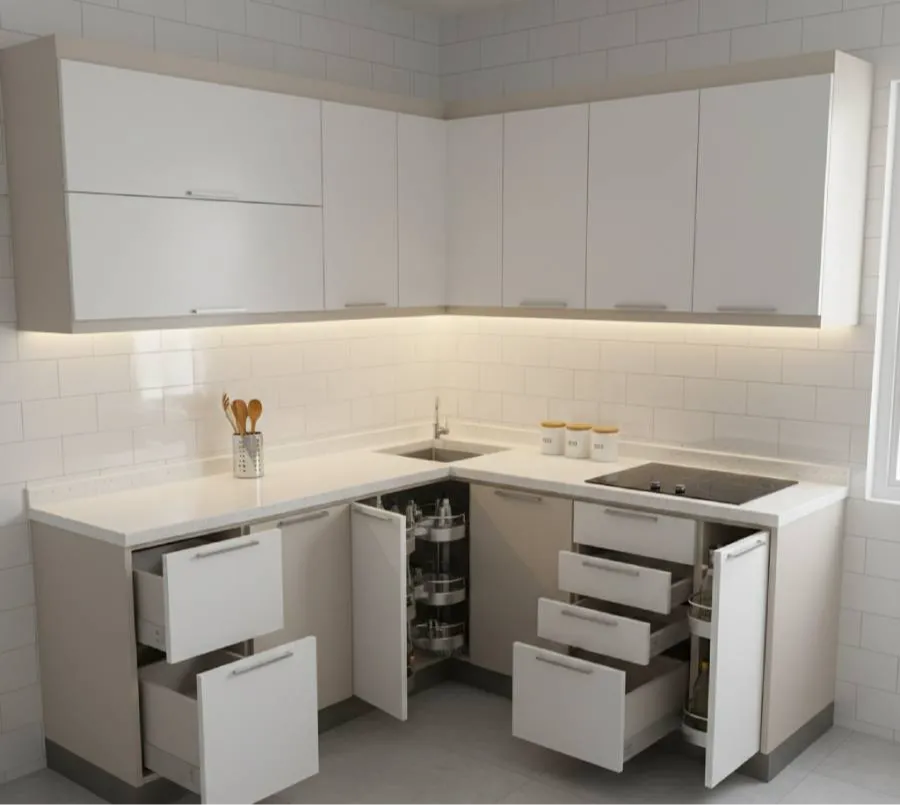
It adapts quite easily, which not every layout does.
Storage feels more natural here
One thing you’ll notice is that storage doesn’t feel forced.
Cabinets run along both walls, so you can divide things based on use—cooking items on one side, cleaning or prep on the other.
Drawers, overhead cabinets, and corner units all fit into the layout without making it feel crowded.
Still, it’s easy to overdo it. Too many cabinets can make the kitchen feel heavy, especially if the space is small.
Keep the design simple (it helps in the long run)
It’s tempting to go for bold colors or glossy finishes. They look good initially.
But over time, simpler designs tend to work better. Lighter shades, less clutter, and easy-to-clean surfaces make daily use more comfortable.
You don’t need a “designer” kitchen. You need one that doesn’t become tiring to maintain.
Counter space matters more than expected
At first, it feels like you have enough.
But once you start using the kitchen regularly, things begin to occupy the counter—appliances, containers, groceries.
That’s when you realize how important it is to leave enough working space.
In an L-shaped layout, this is usually manageable, but only if you plan it from the start.
Lighting and ventilation make a big difference
These are often ignored during planning.
Good lighting isn’t just about brightness—it’s about placement. You need light where you actually work, not just in the center of the ceiling.
Ventilation is equally important. Without it, the kitchen can feel uncomfortable very quickly, especially with regular Indian cooking.
Budget doesn’t depend on layout alone
Many people think an L-shaped kitchen is expensive by default. That’s not really true.
The cost mostly depends on materials, finishes, and fittings—not the shape.
You can keep it budget-friendly or go premium. The layout stays the same; the details change.
Mistakes that show up later
These are things people usually realize after using the kitchen for some time:
- Not planning enough plug points
- Poor lighting setup
- Ignoring how the corner works
- Less counter space than needed
- Too many cabinets making the space feel tight
They don’t seem like big issues during design—but they matter later.
Final thought
An L-shaped modular kitchen doesn’t stand out because it’s flashy. It stands out because it quietly works.
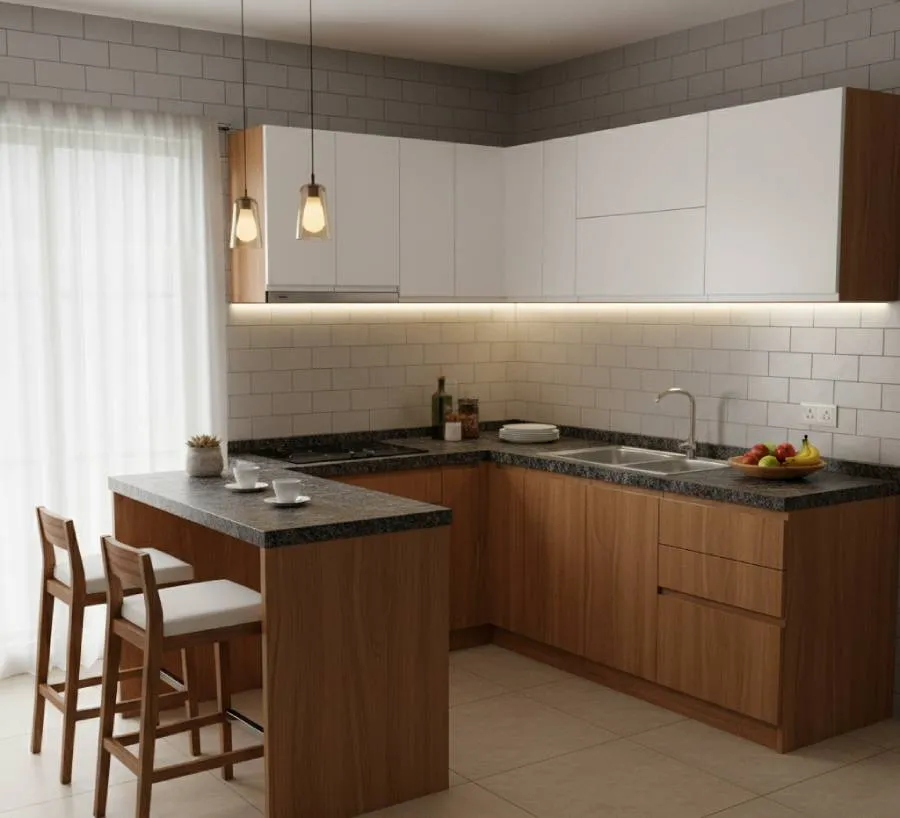
It fits into daily routines without forcing you to change how you cook or move. And in the long run, that matters more than how it looks on day one.
If you’re looking for something practical, flexible, and easy to live with, this layout is a safe and sensible choice.
