
Smart Kitchen Appliances Every Indian Home Needs in 2026 | Kitchen Kaki
Every Indian kitchen has a graveyard. The corner or cabinet where appliances go after the initial enthusiasm fades — the sandwich maker from three years ago, the air fryer from lockdown that's too heavy to move and too expensive to throw away. This is not a guide about every smart appliance being launched in 2026. It's an honest assessment of what actually earns a place in an Indian kitchen — and one popular appliance that definitely doesn't.
Smart Kitchen Appliances Every Indian Home Needs in 2026
I have a complicated relationship with kitchen appliances.
On one side of this relationship: the genuine excitement of a new appliance that actually changes how you cook. The pressure cooker that cuts dal cooking time in half. The mixer-grinder that makes a chutney in forty seconds that used to take ten minutes with a sil-batta. These things earn their counter space and their cabinet space and nobody questions their presence.
On the other side: the graveyard.
Every Indian kitchen has one. The corner or the cabinet or the shelf where appliances go after the initial enthusiasm fades. The sandwich maker that came out for three months and then stopped. The electric egg boiler that seemed like a good idea at the time. The air fryer bought during lockdown that now lives behind the pressure cooker stack because it's too heavy to move regularly and too expensive to throw away.
I say this not to be cynical about new appliances - some of the things that have come into kitchens in the last few years are genuinely useful in ways that older technology wasn't. But 2026 is the year of smart kitchen appliances, and the marketing around them is louder than it has ever been, and it's worth having a clear head about what actually earns a place in an Indian kitchen versus what sounds good in a product video.
What follows is an honest assessment of the smart and upgraded kitchen appliances that are worth considering in 2026 - specifically for how Indian households cook, what Indian families actually need, and what tends to end up in the graveyard.
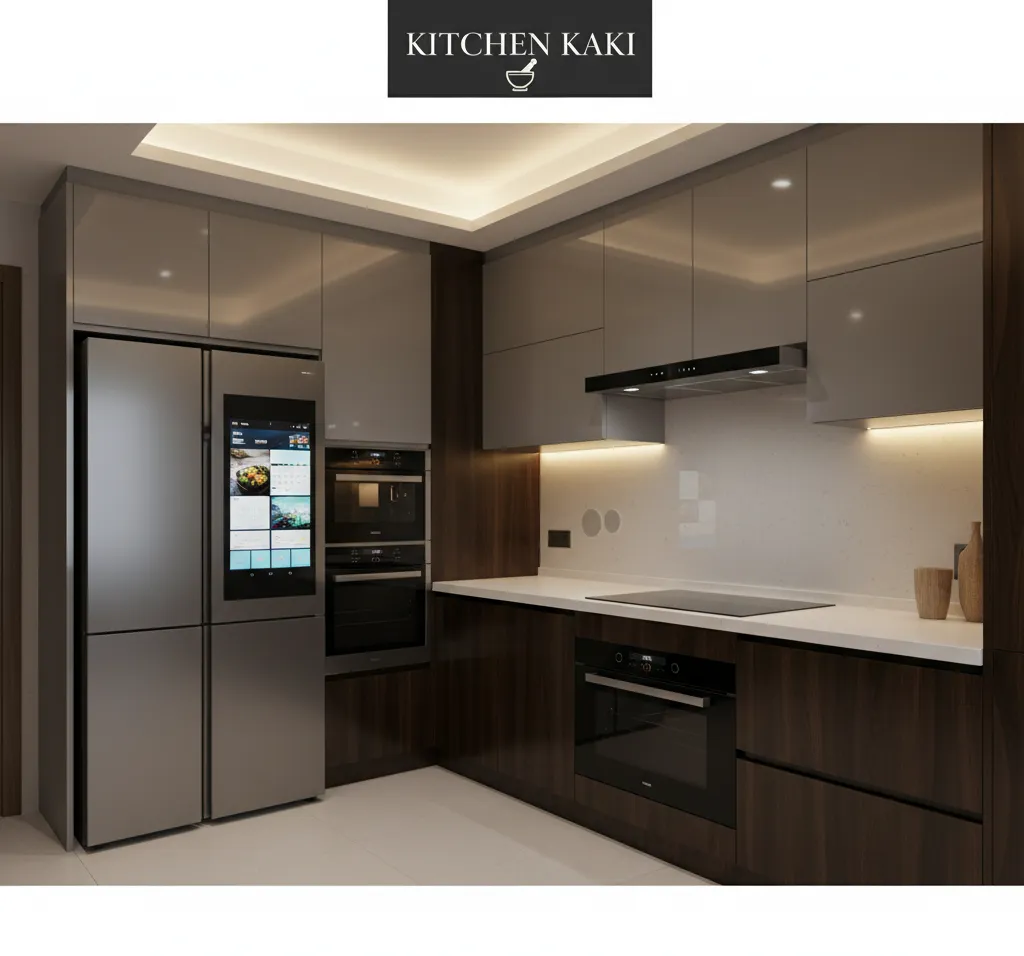
What "Smart" Actually Means in 2026
Before the appliance list - a quick note on the word "smart" because it gets used to mean several different things and the distinctions matter.
Some appliances are smart in the sense of connectivity - they connect to WiFi, have an app, can be controlled remotely, generate data about your usage. A smart refrigerator that shows you what's inside from your phone when you're at the supermarket. A smart chimney that adjusts suction based on cooking activity detected by a sensor.
Some appliances are smart in the sense of improved intelligence - they use sensors, algorithms, or improved technology to do their job better than previous versions. An induction cooktop that precisely maintains temperature. A dishwasher that adjusts water use based on load size. These don't necessarily have an app but they're meaningfully smarter than what existed five years ago.
Some appliances are smart in the sense of marketing - they have a touchscreen or an app or a connectivity feature that adds cost but not real function for the way most Indian households use them.
The appliances worth buying in 2026 fall mostly into the second category - genuinely improved technology that makes real tasks easier. A few from the first category are genuinely useful. Most of the third category can be left on the shelf.
1. The Smart Pressure Cooker - Finally Worth It
The electric pressure cooker - specifically the multi-cooker format that does pressure cooking, slow cooking, sautéing, and keeping warm in a single pot - has been available in India for several years. For most of those years it was a product looking for an Indian household to fit into.
The early versions had limited pressure capacity for Indian cooking requirements. The vessels were often not large enough for family-sized dal or rice quantities. The learning curve for converting traditional recipes was steep enough that most people used it for a few months and returned to the stovetop.
The versions available in 2026 are different in meaningful ways.
Larger capacities - 6 and 8-litre models that actually suit Indian family cooking. Pressure levels that handle the full range of Indian pressure cooking requirements including tougher legumes. Pre-set programmes specifically designed for dal, biryani, khichdi, and idli that have been calibrated for Indian cooking rather than being generic settings renamed with Indian dish names.
The real advantage of an electric pressure cooker for an Indian household is unattended cooking. Put the dal in, set the programme, walk away. The cooker handles the pressure, the timing, the pressure release. No monitoring the whistle count. No moving it to the small burner after a certain number of whistles. No getting called away and coming back to overcooked dal because you forgot.
For working households where someone is managing cooking alongside other responsibilities - which is essentially every urban Indian household in 2026 - this unattended operation is genuinely valuable.
Brands worth looking at: Instant Pot (now more widely available in India), Prestige Electric Cooker (the Indian-specific versions designed for local cooking requirements), and the newer Tefal and Philips multi-cooker models that have improved their Indian recipe programmes meaningfully.
Budget: ₹5,000 to ₹15,000 depending on capacity and brand. Worth it for households that cook dal, legumes, or rice daily.
2. The Improved Mixer-Grinder - Not Glamorous, Genuinely Better
The mixer-grinder is probably the single most important appliance in an Indian kitchen and yet it rarely gets discussed in smart appliance conversations because it's not new and it doesn't connect to WiFi.
The reason it belongs on this list: the quality gap between a good mixer-grinder and a mediocre one has become enormous in 2026 and most households are still using whatever came with the kitchen ten years ago.
The specific improvements worth paying for:
Motor wattage that actually matches Indian grinding requirements. A 750-watt motor handles everyday tasks. A 1000-watt motor handles tougher jobs - grinding rice batter for dosa and idli, hard spice blends, coconut - without overheating. The mixer-grinder that gets hot after two minutes of use and needs to rest before continuing is a low-wattage motor struggling with a task it wasn't built for.
Stone-ground quality from a wet grinder attachment. For households that make dosa and idli batter regularly, a table-top wet grinder produces a batter quality that no mixer-grinder fully replicates. The slow stone grinding aerates the batter in a way that fast blade grinding doesn't. If dosa and idli are weekly or more frequent in your home - a wet grinder is not a luxury, it's the right tool.
Noise-dampening technology. The mixer-grinder is historically one of the loudest appliances in the Indian kitchen - the kind of noise that makes conversation impossible and wakes anyone sleeping in the adjacent room. Several brands now make significantly quieter motors. Preethi, Butterfly, and Sujata have models in the 2026 range with noise reduction that makes a noticeable difference. If the mixer runs during early mornings or in a home where noise is a concern, this matters.
Budget: ₹3,000 to ₹8,000 for a good mixer-grinder. ₹8,000 to ₹20,000 for a quality wet grinder. Both earn their place in an Indian kitchen.
3. The Touchscreen Induction Cooktop - Precision That Actually Helps
Induction cooktops have been in Indian kitchens for years. What's changed in 2026 is the precision and the interface - and the precision specifically is what makes newer induction hobs meaningfully different from the versions from three or four years ago.
Temperature holding. The newer induction models can hold a specific temperature - 60 degrees for keeping dal warm, 85 degrees for tempering chocolate, 100 degrees for a rolling boil - with an accuracy of plus or minus a few degrees. The older induction hobs had power level settings that translated roughly to temperature ranges. The newer ones hold actual temperatures.
For Indian cooking this matters most in a few specific places: slow cooking that needs a consistent low simmer without intervention, milk-based dishes where the temperature boundary between perfect and scorched is narrow, and curd setting where the temperature needs to stay in a specific range for the culture to work correctly.
The touchscreen interface on newer models is also more intuitive than the button interfaces of older induction hobs - though this is a comfort preference rather than a functional one. The elderly family member who was never comfortable with induction because the controls felt unfamiliar may find the visual touchscreen interface more navigable.
Brands: Bosch and Siemens at the premium end. Faber and Elica at the mid range with meaningfully improved precision over their older models. Pigeon and Bajaj for budget-conscious households who primarily need basic induction function.
Built-in induction hob for modular kitchen: ₹8,000 to ₹30,000. Table-top for flexibility: ₹2,000 to ₹8,000.
4. The Smart Refrigerator - Useful Features Versus Expensive Novelty
Smart refrigerators - the ones with cameras inside, touchscreens on the door, and app connectivity - have been arriving in India in increasing numbers. Let's be honest about which features are actually useful and which are impressive in the showroom and forgotten within a month.
Actually useful in 2026:
Inverter compressor technology - not smart in the connected sense, but a genuine technology improvement. An inverter compressor adjusts its speed based on cooling load rather than cycling on and off at full power. The result is significantly lower electricity consumption, lower noise, and a longer compressor life. This technology is now available across price ranges, not just premium refrigerators. When buying a refrigerator in 2026, inverter compressor is the non-negotiable feature - not a luxury upgrade.
Convertible compartments - a freezer that can be converted to refrigerator space and back, depending on seasonal needs or family size changes. Indian households have seasonal variation in refrigerator requirements - the summer fruit load, the winter pickle and achaar storage, the festival season when extra space is needed for sweets and prepared food. A convertible compartment handles this without requiring a second refrigerator.
Humidity-controlled vegetable drawers. Indian cooking uses a lot of fresh vegetables and leafy greens. Proper humidity control in the vegetable drawer extends freshness meaningfully - coriander, curry leaves, and leafy greens that would wilt in two days in a standard drawer last four or five days in a properly humidity-controlled one. Not glamorous. Genuinely useful.
Impressive but not particularly useful:
The internal camera that shows you what's inside from your phone while you're at the supermarket. Sounds useful. In practice - you forget it exists, you don't open the app while shopping, and the camera requires consistent cleaning to stay useful. A refrigerator that's organised properly and labelled clearly does the same job without the technology.
The door touchscreen with recipes and shopping lists. Most families use their phone for both. The refrigerator touchscreen is a large, expensive, difficult-to-update interface for tasks the phone already handles better.
Budget: ₹25,000 to ₹80,000 for a good family refrigerator with inverter compressor and useful features. The touchscreen models start at ₹80,000 and go significantly higher - the premium buys connectivity features that most Indian households won't use daily.
5. The Dishwasher - 2026 Is Finally the Year
The dishwasher conversation in India has been happening for at least a decade. "We have too many steel vessels." "The maid washes dishes anyway." "It won't handle the pressure cooker gasket." "We don't need it." These are the standard objections and each of them has a version of validity.
And yet - in 2026, the dishwasher conversation is shifting. Here is what has changed.
Indian-specific dishwasher programmes. The newer dishwasher models available in India - from Bosch, IFB, and Voltas Beko - now include programmes specifically designed for Indian cooking vessels. Higher temperature wash cycles for the grease load Indian cooking produces. Specific settings for steel vessels. Delayed start for running overnight when electricity rates are lower on time-of-use tariffs.
The steel vessel concern specifically - most steel vessels are dishwasher safe. The pressure cooker body is dishwasher safe. The gasket and whistle should be hand-washed - this takes thirty seconds. The tawa that's seasoned should not go in the dishwasher. Everything else - the steel plates, the dabbas, the kadai, the pressure cooker body, the everyday glasses and cups - handles the dishwasher without issue.
The domestic help argument has genuinely changed in urban India in 2026. Help availability and cost have both shifted significantly in major cities. Many urban households that previously relied on full-time kitchen help are now managing with part-time or no regular help. The dishwasher in this context stops being a luxury and starts being a practical solution to a real daily problem.
The counter or under-counter space it requires is real. The water and electricity consumption are real costs. But for a household of four or more that generates meaningful daily dishwashing - the dishwasher earns its place in a way it didn't for most Indian households five years ago.
Budget: ₹30,000 to ₹60,000 for a 12 to 15-place setting dishwasher from a reliable brand. IFB has the most India-specific design experience. Bosch has the most consistent build quality.
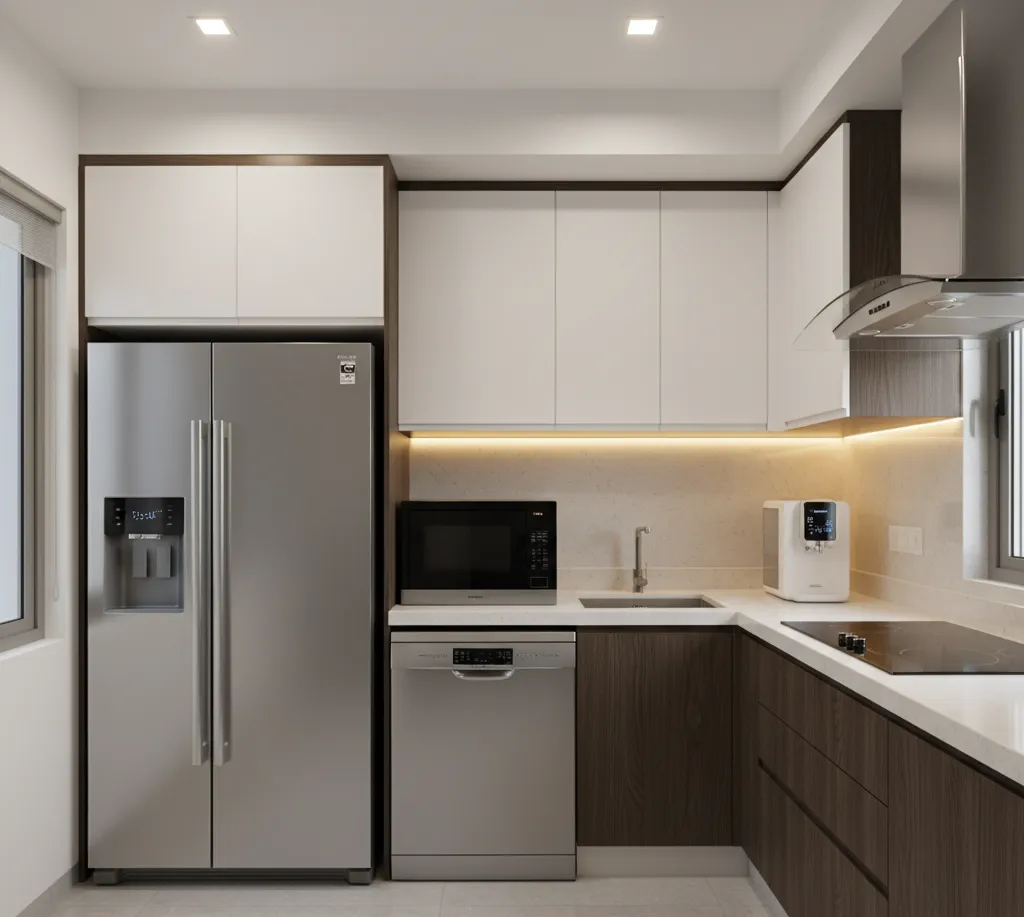
6. The Smart Chimney With Auto-Sensing
The auto-clean chimney was last year's kitchen conversation. The 2026 version is the auto-sensing chimney - one that uses sensors to detect cooking activity and automatically adjusts suction speed.
When you start cooking and heat builds, the chimney detects the change and increases suction. When cooking stops and the heat dissipates, it reduces speed or turns off. You don't touch the chimney during cooking - it responds to what's happening on the hob.
For households where the chimney is regularly forgotten - turned on too late, left running long after cooking is done - the auto-sensing function addresses the actual behaviour rather than requiring a behaviour change.
The sensor technology in 2026 models is meaningfully more accurate than the early versions from two or three years ago, which had false activation problems - the chimney turning on because of oven heat or even sunlight in some cases. The current generation sensors are more specifically calibrated to cooking activity.
Brands with reliable auto-sensing: Faber, Elica, and Hindware at the mid to upper range. The feature adds roughly ₹3,000 to ₹8,000 to the cost of an equivalent non-sensing chimney. Worth it for households where chimney management is genuinely a source of inconsistency.
7. The Water Purifier - Smarter Than You Think It Needs to Be
Every Indian home has some form of water purification. What's changed in 2026 is the intelligence of the system - and a few specific improvements that are worth knowing about.
TDS controllers on RO systems. Standard RO (reverse osmosis) purifiers strip almost everything from the water - including the minerals that make water taste good and that the body needs. RO water with very low TDS (total dissolved solids) has a flat, slightly off taste that many people notice but don't connect to the purifier. TDS controllers allow a specific amount of minerals to be retained, improving taste while still removing contaminants. This feature is now available on mid-range purifiers, not just premium ones.
UV + RO combination with zero-water-waste technology. Standard RO systems waste two to three litres of water for every litre purified - a significant concern in cities with water scarcity. The newer zero-waste or minimal-waste RO systems reduce this to near zero by recycling the rejected water for other household uses. In a city like Bengaluru or Chennai where water is genuinely scarce, this matters practically and financially.
App-connected filter life monitoring. The most useful smart feature in a water purifier is the one that tells you when the filter actually needs changing rather than relying on the scheduled service visit that the technician reminds you about at the six-month mark regardless of actual filter condition. Real-time filter monitoring reduces both under-servicing (when the filter is genuinely spent) and over-servicing (when the scheduled visit happens before the filter needs replacement).
Budget: ₹10,000 to ₹25,000 for a quality RO+UV system with TDS control. The app-connected versions start around ₹15,000. Kent, AO Smith, and Livpure all have improved their 2026 models meaningfully over previous versions.
8. The Improved Air Fryer - Redeemed From the Graveyard
I mentioned the graveyard at the beginning of this piece. The air fryer has historically been one of its more frequent residents in Indian homes - bought with enthusiasm, used briefly, and then sidelined when it became clear that it didn't replicate the results of deep frying for most Indian dishes and required more attention than it saved.
The 2026 generation of air fryers has addressed several of the specific problems that made earlier versions less suited to Indian cooking.
Larger capacity - 6 and 7-litre models that can handle a family-sized batch of samosas, pakoras, or chicken rather than the 2 to 3-litre models that required multiple batches to feed four people. Multiple batches defeat half the convenience argument.
Dual-zone cooking - two separate baskets with independent temperature and time controls. Cook the tikka in one basket and the vegetables in another simultaneously, at different temperatures, finishing at the same time. This is genuinely useful for Indian meals where multiple components are being prepared.
Better results on Indian snacks specifically. The earlier air fryers struggled with dishes that have high moisture content - the outer crust didn't crisp the way it does in hot oil, resulting in a slightly leathery texture. The newer models with improved airflow and higher temperature capacity produce a significantly closer result on samosas, kachori, and bread pakoda than previous generations managed.
It still does not replicate deep frying perfectly. It is not a direct substitute. But it produces results that are good enough, uses significantly less oil, and takes the deep-frying smell and mess out of the kitchen - which for Indian cooking that includes regular fried snacks is not a small thing.
Budget: ₹4,000 to ₹12,000 for a quality dual-zone or large capacity model. Philips, Cosori, and the newer Havells models are the ones delivering meaningfully improved results for Indian cooking in 2026.
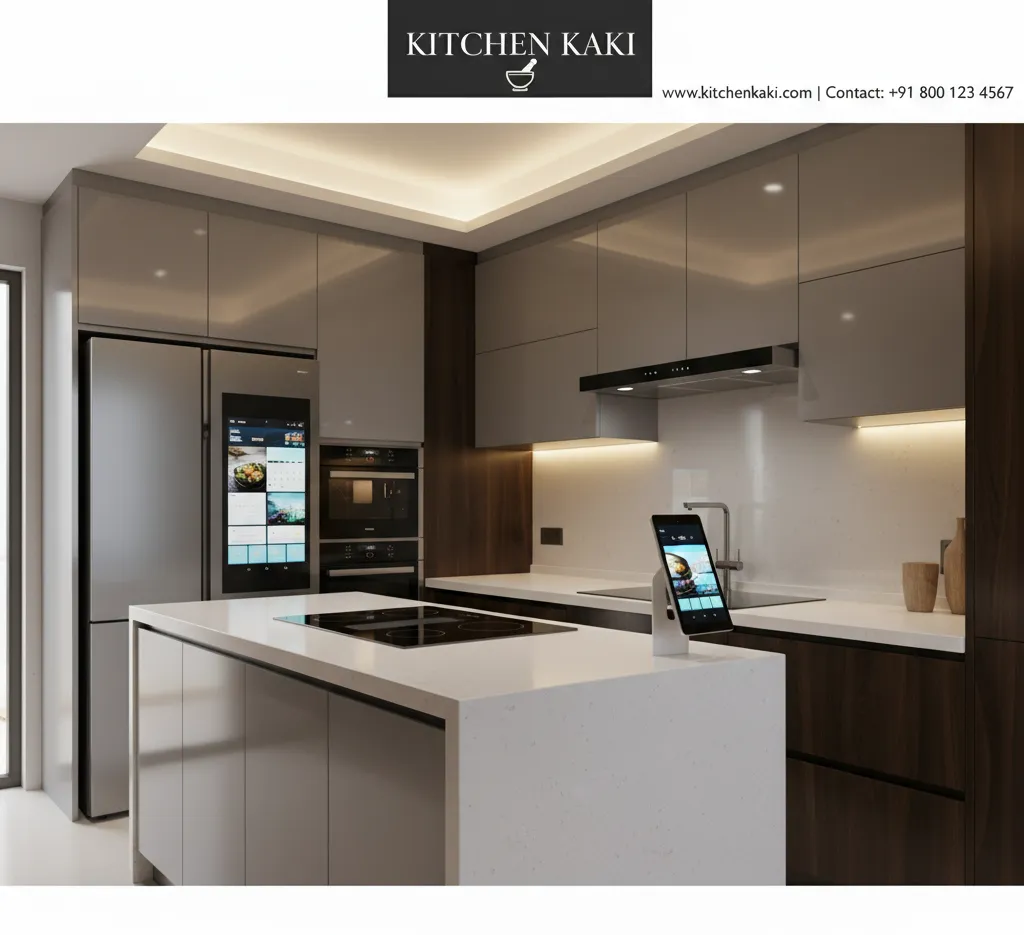
9. The Smart Coffee and Chai Maker
This one is specific to households where the morning chai or coffee routine is a daily ritual that currently requires either full attention or inconsistent results depending on who makes it.
The smart chai maker - not the simple electric kettle with a strainer, but the appliance that handles the full process of brewing tea with milk, ginger, and spices at programmable ratios and strengths - has become a genuinely good product in 2026 after several years of mediocre versions.
The specific improvements: programmable strength and spice levels that actually produce consistent results rather than approximations, a delayed start function so the chai is ready when the household wakes up, and cleaning cycles that handle the milk residue problem that made earlier versions a maintenance nightmare.
For the household where the morning chai is an important daily ritual and the inconsistency of different family members making it is a daily minor friction point - this appliance solves a real problem. For households where the chai-making is valued precisely because someone takes care to make it properly - the machine doesn't replace the intention and probably shouldn't.
The same category - consistent automatic preparation - applies to filter coffee machines for South Indian households. The market for quality filter coffee machines has expanded significantly in 2026 with several Indian brands producing machines calibrated for South Indian filter coffee specifically, not just espresso adaptations.
Budget: ₹3,000 to ₹8,000 for a good chai maker. ₹5,000 to ₹15,000 for a quality South Indian filter coffee machine.
10. The One Appliance That Is Not Worth It in 2026
Smart ovens with voice control and recipe suggestion.
The technology works. The voice control is accurate. The recipe suggestions are comprehensive. The oven preheats to the right temperature for what you're cooking based on a voice command or a recipe selection.
And yet - in an Indian kitchen where the oven is already an occasional-use appliance for most households (as we discussed in the built-in oven article), adding a layer of voice control and connectivity to an appliance that gets used twelve times a year does not change the usage frequency. It adds cost, adds complexity, adds a potential point of failure (the connectivity features tend to be the first things that stop working as software updates outpace the appliance's hardware), and doesn't address the actual reason most Indian ovens are underused - which is that Indian cooking is fundamentally stovetop cooking and the oven is supplementary.
If the oven is used regularly in your household - weekly baking, roasting, regular oven cooking - a smart oven's temperature precision and programme memory are genuinely useful features. But the voice control and connectivity features specifically are the parts that cost the most and matter the least for actual cooking outcomes.
The Honest Filter
Before buying any appliance described in this piece - or any appliance at all - one question:
What specific task in my kitchen is currently taking more time, effort, or producing worse results than it should?
If the answer is clear and the appliance directly addresses it - buy it. The electric pressure cooker for the household that monitors every whistle of a stovetop cooker during a busy morning. The improved mixer-grinder for the household whose current one heats up and needs resting mid-grind. The dishwasher for the household managing without help and spending forty minutes on dishes every evening.
If the answer requires imagining a cooking habit you don't currently have - skip it. No appliance creates a cooking habit. The appliance that solves a real problem earns its place. The appliance that anticipates a theoretical improvement tends to move toward the graveyard within six months.
The graveyard has enough residents. The kitchen has enough going on.
More practical kitchen planning and appliance advice for Indian homes at Kitchen Kaki.
