
Matte Finish vs Glossy Finish Kitchen: Which Looks Better?
The glossy cabinet looked like liquid mercury under showroom lights. In a north-facing kitchen with one CFL? Completely different story. Here's what matte and glossy actually look like in real Indian kitchens.
Matte Finish vs Glossy Finish Kitchen: Which Looks Better?
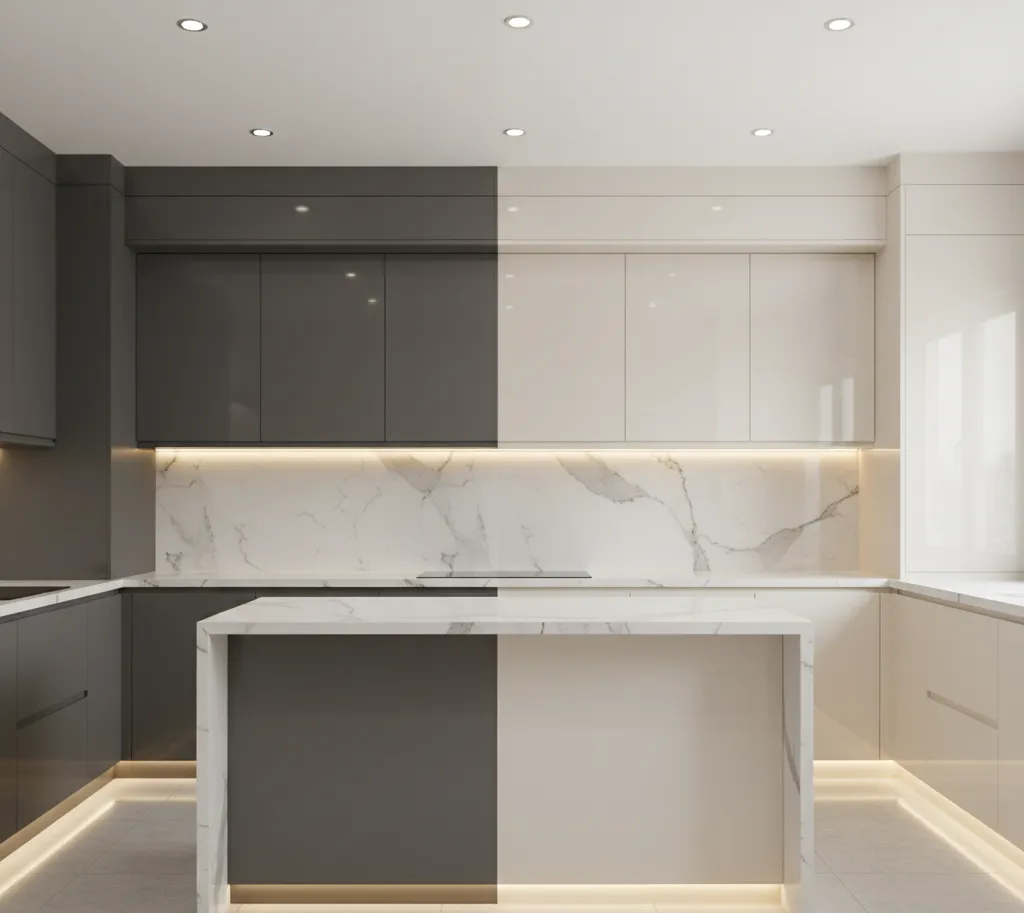
The showroom on Ajmer Road has these two sample cabinets side by side. Same colour - a medium grey. One matte. One glossy. Under the showroom's bright LED panel lights, the glossy one looks spectacular. It catches the light. It reflects the ceiling. It has this depth that makes the grey look almost metallic. The matte one looks... fine. Flat. Pleasant. Like it's not trying.
Every single person who walks in gravitates toward the glossy one first. I've watched this happen. I've spent way too many Saturdays in that showroom. The glossy sample gets touched, admired, photographed. The matte sample gets glanced at and passed over. The showroom guy knows this. He positions the glossy one at eye level. The matte one sits slightly lower. Subtle.
But here's what the showroom doesn't tell you. Showroom lighting is NOTHING like your kitchen lighting.
Your kitchen doesn't have six recessed LED panels flooding the room with uniform 5000K cool white light from a 10-foot ceiling. Your kitchen has one tubelight. Maybe two if you're lucky. A window that gets direct sun for three hours and then nothing. An LED strip under the upper cabinets that lights the counter but doesn't reach the base cabinets below. And in the evenings, whatever your living room light throws into the kitchen through the doorway.
The glossy cabinet that looked like liquid mercury in the showroom? In your kitchen's uneven, warm, partial lighting? It looks completely different. Sometimes better. Sometimes worse. And I learned this the hard way by watching it happen in three different homes.
What Happened to Sharma Aunty's Glossy White Kitchen
Sharma aunty - the neighbour with the stainless steel kitchen - has a friend in Vaishali Nagar who went full glossy white acrylic. Every cabinet, top to bottom. She picked the colour and finish at a showroom that had the same blazing overhead lights as the Ajmer Road place. It looked clean, modern, like a kitchen from a European magazine.
Her actual kitchen faces north. Barely any direct sunlight. The window is small. The ceiling light is a single warm-white CFL tube because her husband hasn't gotten around to changing it to LED.
Under that warm, dim, yellowish light, the glossy white cabinets don't glow. They look almost creamy. Not crisp white. Not that magazine look. And every surface reflects the yellow CFL light back at slightly different angles depending on how flat the cabinet door is. If one door is even marginally warped - and acrylic shutters can develop micro-warps over time - the reflection distorts and creates a wavy effect that makes the surface look uneven even if it's technically flat.
I visited her kitchen once. The glossy white looked tired in the dim light. Like it was waiting for better lighting to perform. Then she turned on the under-cabinet LED strip - cool white, 6500K - and the counter area suddenly popped. The base cabinets below the counter, still lit only by the ceiling CFL, looked dull by comparison. Two zones in the same kitchen, same white cabinets, looking like two different materials because the lighting was different.
She's since replaced the CFL with a cool white LED panel. The kitchen looks dramatically better. But the point stands - glossy finishes are lighting-dependent in a way matte finishes are not. They perform when the light is right. They disappoint when it isn't.
What Happened to Radhika's Matte Grey-Green Kitchen
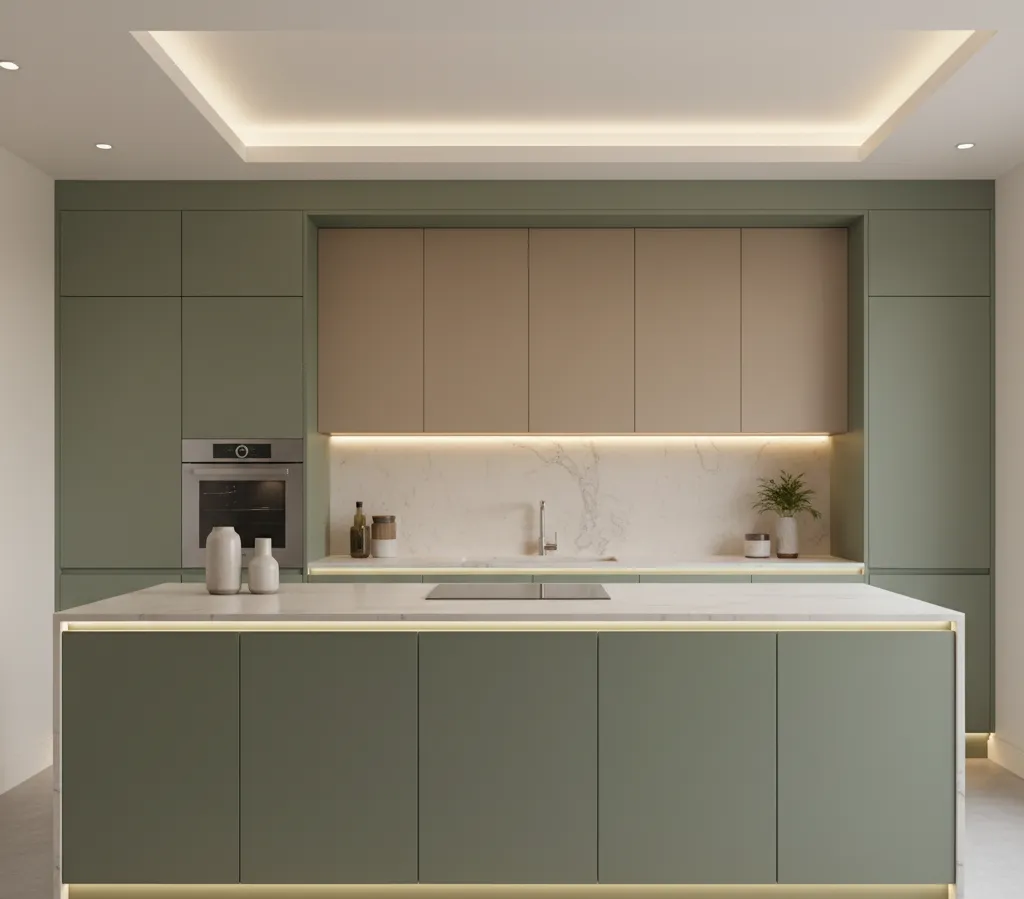
Radhika's kitchen has matte textured laminate. Grey-green. Not glossy at all. When she picked it at the showroom, nobody gasped. I told this story in an earlier blog - she was mildly annoyed at the lack of enthusiasm.
Her kitchen faces east. Gets good morning light for about three hours. After that, it depends on the tubelight and the LED strip.
Here's the thing about matte in real-world lighting. It looks the same. Morning light? Grey-green. Afternoon tubelight? Grey-green. Evening LED strip? Grey-green. The colour doesn't shift. It doesn't depend on the angle of light. It doesn't reflect the ceiling or the window or the person standing in front of it. It just IS its colour, consistently, regardless of what light is doing.
This sounds boring. And in a showroom where glossy is catching light and performing like a Bollywood star, matte IS boring by comparison. But at 7pm on a Wednesday when you're exhausted from work and the kitchen light is whatever the CFL provides, matte looks exactly the way you expected it to. No surprises. No disappointment. No "why doesn't my kitchen look like the showroom photo?"
Radhika has never once commented on her cabinet finish looking different at different times of day. Because it doesn't. Matte absorbs light instead of reflecting it. There's no performance. Just consistency.
After eight months, she told me - and this is a direct quote - "I forgot what finish I have. I just see the colour." That, to me, is the highest compliment a kitchen finish can receive. You stop seeing the finish and just see your kitchen.
The Fingerprint Thing (Told Through a Very Specific Evening)
I'm going to skip the usual "glossy shows fingerprints" advice that every blog gives and tell you about one specific evening instead.
Bhabhi's kitchen. Dark navy acrylic base cabinets. Glossy. Her daughter had been making maggi after school. Eleven-year-old fingers - slightly oily from the maggi butter, slightly wet from washing hands but not drying them - opened four base cabinets in the process of getting a pot, a plate, a spoon, and the maggi packet.
I arrived about thirty minutes later. The kitchen was clean. Bhabhi had wiped the counter. Dishes were done. Everything looked tidy. Except - and I noticed this because my eyes are permanently calibrated for cabinet surface anomalies - the four base cabinets her daughter had touched had fingerprints visible under the LED strip light. Small fingers. Clear prints. On the glossy navy surface, they caught the light at specific angles like little forensic exhibits.
Bhabhi noticed me noticing. She grabbed the microfibre cloth - which lives permanently on her counter now, like a kitchen accessory - and wiped all four doors in about forty seconds. Clean. Pristine. Like nobody had ever touched them.
Forty seconds isn't a lot. But forty seconds after every interaction with every cabinet, multiple times a day, across years of cooking - it adds up. Bhabhi estimates she spends about 10-15 minutes daily on cabinet wiping. During Jaipur's dust season - March through June - it goes up because dust settles on glossy surfaces and forms a visible film that matte never shows.
Radhika's matte kitchen? Her daughter also makes maggi. Same oily-fingers situation. Same four cabinets opened. The fingerprints technically exist on the surface - oil transferred from skin to laminate. But you CAN'T SEE THEM. The matte texture diffuses light in a way that makes oily smudges invisible to the naked eye in normal lighting conditions.
Radhika doesn't own a dedicated cabinet-wiping cloth. She wipes her cabinets when she does a general kitchen clean - maybe once a week. Her kids touch cabinets with dal-covered hands, ghee fingers, wet palms. Nothing shows. Nothing.
This isn't a theoretical advantage. It's the difference between owning a permanent microfibre cloth and not knowing you need one.
The Scratch Situation
Glossy surfaces scratch easier. This is just physics. A smooth, reflective surface reveals damage that a textured surface absorbs.
Bhabhi has a 2-inch scratch on the cabinet next to her hob. Origin unknown. Probably a steel vessel bumped it during cooking. On the glossy navy surface, this scratch catches light at every angle. She's tried acrylic polish. It faded the smallest scratches. The big one remains.
On matte textured laminate, an equivalent scratch would be absorbed into the surface texture. The texture IS a series of micro-irregularities. One more irregularity - a scratch - blends in. Rohit's walnut-textured matte cabinets have taken a year of pressure-cooker bumps and kid abuse. I've looked closely. I can't identify individual scratches because the grain pattern camouflages them.
This matters more in Indian kitchens than in Western ones. We store and handle heavy steel vessels daily. Pressure cooker lids. Tawa handles. Kadai edges. Every one of these is a potential scratch source. In a kitchen that sees three meals a day with heavy steel cookware, glossy surfaces accumulate visible damage faster than matte.
But Glossy Does One Thing Matte Can't
I need to be fair because there's a real, legitimate, non-trivial advantage to glossy that matte can't match.
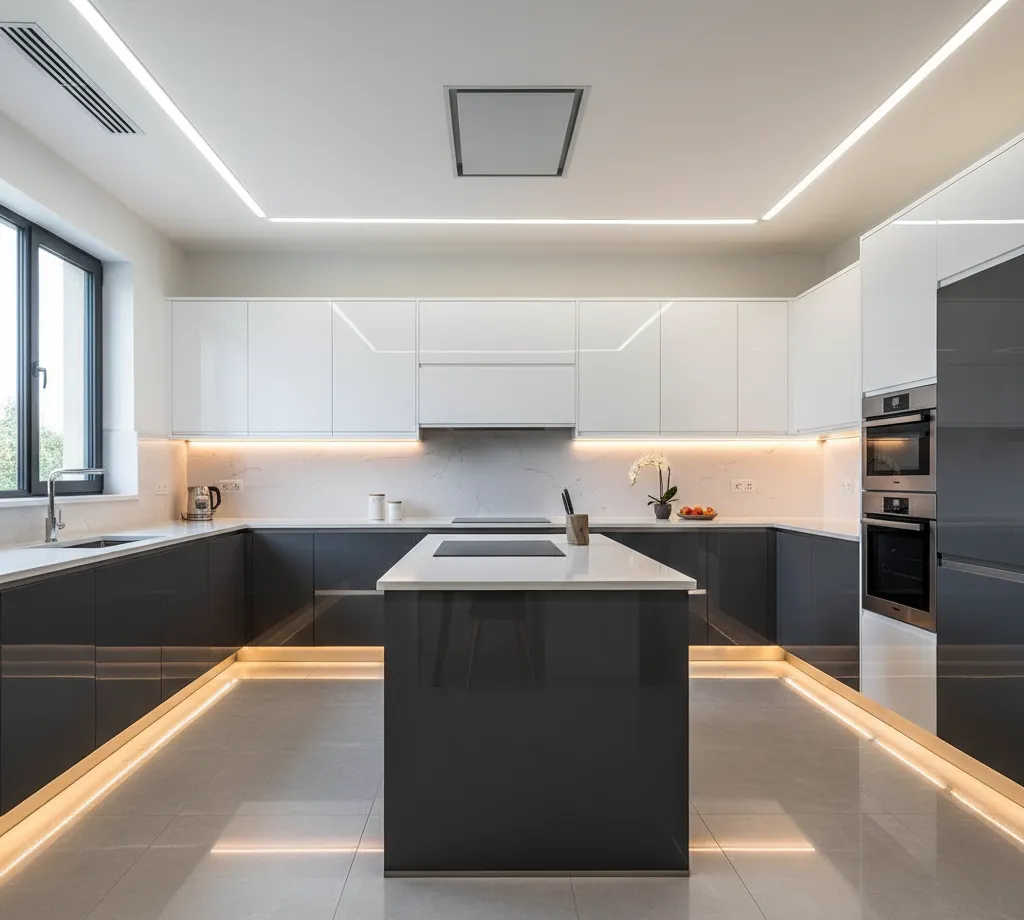
Glossy makes small kitchens feel bigger. The reflective surface bounces light around the room. In a 7-by-8-foot kitchen with limited natural light, glossy white or glossy light grey cabinets can make the room feel 15-20% more spacious than the same colour in matte. Matte absorbs light. In a small dark kitchen, matte can make the space feel cave-like.
Sharma aunty's friend - the one with the glossy white in the north-facing kitchen - replaced her CFL with an LED panel. The moment the brighter, cooler light hit those glossy surfaces, the kitchen TRANSFORMED. It went from dim and tired-looking to bright and open. Light bouncing off glossy white surfaces and reflecting off the granite countertop and the stainless steel sink - the whole room brightened up by what felt like 30%.
Matte would never do that. Matte in a dim kitchen stays dim. It doesn't multiply available light. It doesn't create the illusion of space. It just sits there being consistently itself - which is usually fine but in genuinely dark, small kitchens, can feel oppressive.
If your kitchen is under 60 square feet AND gets poor natural light AND you're willing to commit to regular wiping, glossy might genuinely be the better call. The space-creating effect is real and valuable in Indian apartment kitchens where square footage is always tight.
The Decision Framework That I Use Now
After watching glossy and matte play out in real kitchens for three years, I've stopped asking "which looks better?" and started asking three different questions.
How's your kitchen lighting? Good natural light plus bright LEDs? Either finish works. Poor light and a small room? Glossy earns its maintenance cost by making the space feel bigger. Well-lit and spacious? Matte looks sophisticated without the wiping burden.
How honest are you about cleaning? If "I'll wipe daily" means you'll actually wipe daily - not for two weeks and then forget - glossy will reward you with a stunning kitchen. If "I'll wipe daily" means what it means for 90% of humans, which is "I'll wipe when guests are coming" - get matte. Glossy punishes neglect visually. Matte forgives it.
Do you have kids under twelve? This question alone settles it for half the families I've advised. Little hands with food residue touching cabinets ten times a day. On glossy - forensic exhibition. On matte - invisible. Bhabhi has accepted the wiping tax. Not every parent will.
Both finishes can look beautiful. Both can look terrible. The difference is that glossy needs YOUR help to look good - the right lighting, the right cleaning, the right care. Matte looks good on its own without asking anything of you.
One needs a relationship. The other just needs to exist.
More kitchen finish advice from someone who stares at cabinet surfaces under different lights? KitchenKaki - we check in real kitchens, not showrooms.
